
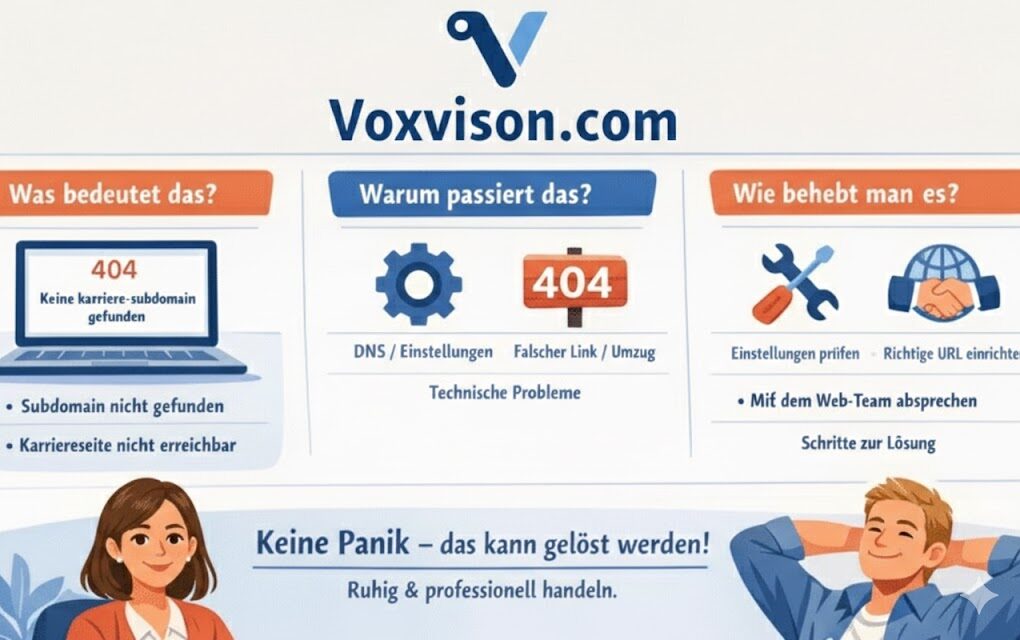
The error “Keine Karriere-Subdomain Gefunden” occurs when a website’s career subdomain is missing or misconfigured. It can appear after website migrations, DNS changes, or incorrect URLs. This problem affects user experience, employer branding, and SEO performance. Fixing it involves verifying DNS settings, creating the subdomain, linking external career platforms, enabling SSL certificates, and testing the site across devices to ensure seamless access for job seekers.
If you encounter the “Keine Karriere-Subdomain Gefunden” error, it signals that your career subdomain isn’t set up properly. Causes include website migrations, DNS adjustments, third-party integrations, or simple URL mistakes. This problem affects both job seekers and companies, potentially resulting in lost applications, confusion, and decreased online credibility. This guide covers causes, technical explanations, real-world scenarios, step-by-step solutions, SEO implications, and best practices. By following these instructions, organizations can maintain employer branding, ensure a smooth user experience, and prevent future subdomain-related errors effectively.
Was bedeutet „Keine Karriere-Subdomain Gefunden“?
The phrase “Keine Karriere-Subdomain Gefunden” literally means that the website’s career subdomain cannot be found. This usually occurs when the subdomain hasn’t been created, misconfigured, or DNS settings are incorrect. Job seekers visiting the career page may see a broken link or error message, which leads to frustration. Understanding this error is critical for businesses, as it indicates missing technical configurations and a gap in online recruitment processes. Addressing it promptly ensures smooth navigation and preserves trust in your brand.
Warum dieser Fehler für Websites wichtig ist
A missing career subdomain directly impacts website performance and user experience. Companies risk losing qualified applications, damaging employer branding, and creating a negative impression. When job seekers cannot access career pages, they may assume the company is unprofessional or inactive. For organizations aiming to attract top talent, addressing this error is essential. It also influences SEO rankings, as search engines may flag broken or missing subdomains, affecting website authority and visibility in search results.
Häufige Situationen, in denen der Fehler auftritt
The “Keine Karriere-Subdomain Gefunden” error often appears during website migrations, after DNS changes, or when integrating third-party platforms. It can also occur due to incorrect URL entries or accidental deletion of subdomain files. Recognizing these situations helps web administrators diagnose the problem quickly. By understanding common triggers, organizations can implement preventive measures, such as thorough testing post-migration, validating DNS settings, and monitoring third-party tool configurations to avoid recurring issues.
Fehler während einer Website-Migration erkennen
During a migration, URLs and subdomain structures can change. If the career subdomain is not recreated or properly redirected, visitors encounter errors. Administrators should verify that all legacy URLs are active and mapped correctly. Testing each career page after migration ensures seamless user experience. Using migration checklists and automated crawlers helps identify broken links or missing subdomains before the website goes live, reducing the risk of losing potential applicants
DNS-Änderungen und ihre Rolle bei Subdomain-Problemen
Incorrect DNS settings are a common cause of missing subdomains. If the DNS records for the career subdomain are not updated or propagate incorrectly, users cannot access the page. Checking A, CNAME, and SSL records is crucial to ensure proper functionality. Regular monitoring of DNS entries allows web admins to detect issues early, preventing prolonged downtime and minimizing negative effects on both user experience and search engine crawling.
Probleme durch Drittanbieter-Tools für Karriereseiten
Third-party hiring tools and career platforms may conflict with existing subdomain setups. For example, integrating an external job board incorrectly can override DNS settings or redirect traffic incorrectly. Ensuring proper platform configuration, following integration guidelines, and testing connections across devices are necessary steps. Using trusted plugins or API integrations minimizes technical conflicts and prevents the “Keine Karriere-Subdomain Gefunden” error from disrupting the recruitment process.
Fehlerhafte URL-Eingaben vermeiden
Simple mistakes, like typos in URLs or inconsistent links on other pages, can trigger the missing subdomain error. Maintaining a consistent URL structure is critical. Companies should regularly audit their website for broken links, provide redirects for outdated URLs, and ensure hyperlinks from emails, social media, and job listings point to the correct career subdomain. Correcting errors promptly improves accessibility and reinforces a professional image.
Also read this: Gosford Employment Service Wage Subsidy Providers: Complete Employer Guide 2026
Technische Ursachen hinter „Keine Karriere-Subdomain Gefunden“
Technical factors such as missing subdomain creation, expired SSL certificates, server misconfigurations, or hosting limitations can cause this error. A misconfigured web server may not recognize the career subdomain, leading to a “not found” message. IT teams must review server logs, verify subdomain setup in hosting panels, and ensure that SSL certificates are valid. Addressing technical causes thoroughly prevents repeated errors and ensures the career page is reliable and accessible.
Wie Bewerber diesen Fehler erleben
From a job seeker’s perspective, encountering a broken career subdomain is frustrating. Users may be confused, assume the company is inactive, or abandon the application process. Negative experiences can spread through social media and review sites, further impacting employer reputation. Ensuring smooth access and minimizing errors directly improves candidate experience and demonstrates professionalism in recruitment practices.
Auswirkungen auf Unternehmen und Employer Branding
A missing career subdomain damages credibility, reduces applicant numbers, and affects trust. Companies risk losing top talent to competitors with fully functional career pages. SEO authority is also impacted, as broken subdomains reduce search engine trust. Maintaining a working subdomain is therefore critical for both recruitment efficiency and long-term online reputation. Proper management of technical and content elements ensures positive branding and keeps career pages effective.
Schritt-für-Schritt-Lösungen für Subdomain-Probleme
Resolving the “Keine Karriere-Subdomain Gefunden” error involves several steps: first, create the career subdomain through your hosting provider. Next, configure DNS records correctly, ensuring proper CNAME or A records. Connect any third-party career platforms and enable SSL certificates for secure browsing. Finally, test the subdomain on multiple devices and browsers to confirm accessibility. Document these processes to facilitate future maintenance and avoid recurring issues.
Best Practices: So verhindern Sie Subdomain-Fehler
Preventing future errors involves regular website audits, monitoring DNS settings, and ensuring seamless integration with third-party tools. Consistent URL structures, automatic redirects for outdated links, and timely SSL renewals are also essential. Training web admins and HR teams to recognize potential issues early ensures career pages remain functional. These practices maintain a professional appearance, improve user experience, and protect SEO rankings.
SEO-Effekte einer fehlenden Karriere-Subdomain
A missing career subdomain affects crawling and indexing, resulting in lost keyword rankings and decreased visibility. Higher bounce rates occur when users cannot access the intended page, signaling search engines about low site quality. Reduced trust signals from broken subdomains can impact domain authority. Fixing the subdomain ensures proper indexing, improves keyword performance, and enhances overall search engine optimization for career-related queries.
Karriere-Subdomain vs. Karriere-Seite: Wichtige Unterschiede
A career subdomain (e.g., careers.example.com) is separate from the main website, allowing more technical control and scalability. A career page (e.g., example.com/careers) is part of the main domain. Subdomains can host third-party integrations, manage SSL independently, and reduce conflicts with other pages. Understanding this distinction helps businesses choose the best structure for recruitment while avoiding common errors that trigger the missing subdomain issue.
Wer ist verantwortlich für die Behebung dieses Fehlers?
Responsibility for fixing a missing career subdomain typically falls on IT teams, web admins, and sometimes HR or third-party platform managers. Collaboration ensures all technical and functional aspects are addressed. IT handles server and DNS configurations, HR ensures external tools are linked correctly, and web admins monitor live performance. A coordinated approach prevents recurring errors and maintains a professional online recruitment experience.
Conclusion
A missing career subdomain can seriously affect user experience, employer credibility, and SEO performance. By following best practices, monitoring regularly, and addressing technical issues promptly, businesses can ensure career pages work flawlessly. Implementing the outlined steps provides both immediate fixes and long-term prevention for the “Keine Karriere-Subdomain Gefunden” error. This guarantees smooth access for job seekers, protects online reputation, and maintains search engine authority.
7 FAQs
- Ist „Keine Karriere-Subdomain Gefunden“ ein Serverfehler?
No, it usually indicates a misconfigured or missing subdomain, not a server crash. - Kann sich dieser Fehler von selbst beheben?
No, manual configuration or subdomain creation is required to fix it. - Trifft es nur deutsche Websites?
No, any website using career subdomains can experience this issue. - Ist dieser Fehler gefährlich?
Not harmful, but it affects usability, applications, and SEO performance. - Wie überprüfe ich, ob meine Subdomain funktioniert?
Check via browser, DNS lookup tools, and website crawlers. - Welche Tools helfen bei der Fehlerbehebung?
DNS monitoring tools, webmaster consoles, and SSL checkers are useful. - Wie verhindere ich zukünftige Subdomain-Probleme?
Conduct regular audits, monitor DNS, and follow technical best practices.
For more info: voxvison.com
